Governments across Europe are faced with significant challenges in meeting an urgent demand for housing. Whilst housing markets have been significantly slowed over the course of 2020, the outbreak of the Covid-19 pandemic has been projected to have a long-standing impact stretching years into the future. With the industry facing considerable pressures, consumers have demanded efficient and affordable housing more than ever before. In the latest piece from KES Group, we look at how modular buildings can positively transform the industry.
Here at KES Group, we have long-promoted the benefits of modular construction and the variety of sectors which this mode of production can benefit. Modular buildings, including SMARTBUILDS by KES Group, present a number of solutions to an industry which is currently struggling to meet demand. We’ve shared 5 reasons why modular buildings are transforming the sector:
Navigating a Material Shortage
Over the past decade, Europe’s construction industry has faced a new challenge: a shortage in essential building materials, including bricks. Notably, the UK’s construction industry waits an average of 12 months for bricks, with prices rising year-on-year. This has made the development of housing a costly, time-consuming and often tedious affair. The raw materials required in traditional construction methods are at their highest demand ever, and the industry must adapt with a totally new approach to overcome this challenge. In this regard, modular construction is projected to lead the way.
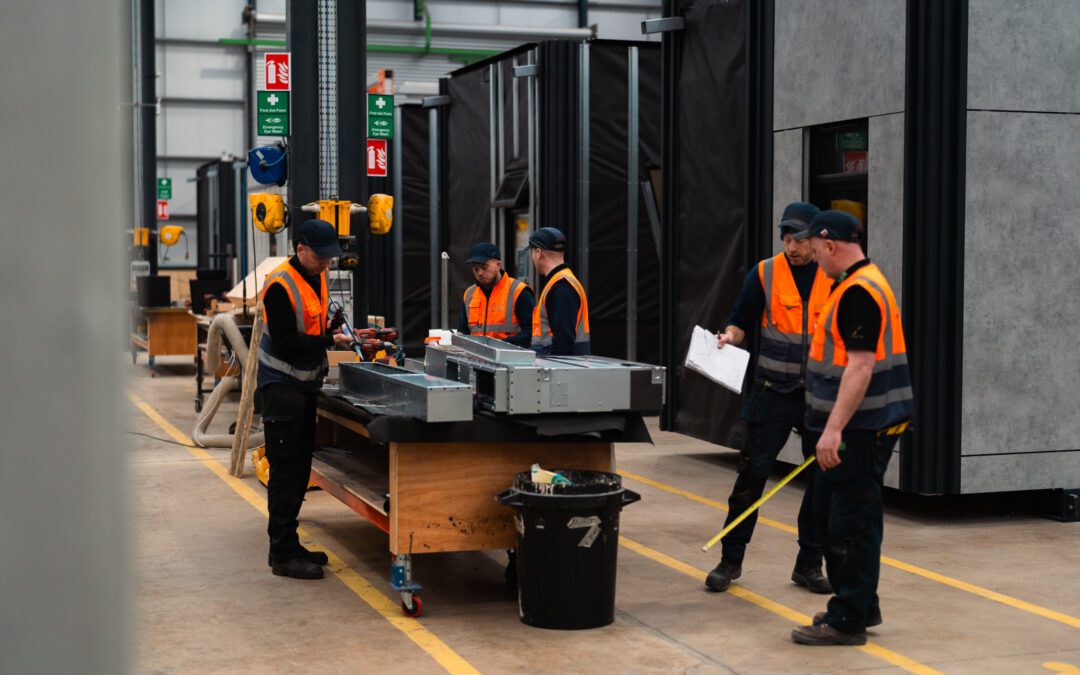
Navigating this material shortage is critical to meet housing demand. But how does modular construction differ from traditional construction in terms of raw materials? The answer lies in the variety of materials used, which are not solely dependent on the supply of bricks. The vast majority of a SMARTBUILD, for example, is prefabricated in a factory. Whilst this carries a number of environmental benefits, this approach typically requires less materials than seen in a traditional construction setting.
Overcoming a Sectoral Skill Deficit
Whilst Europe’s construction industry faces a major shortage in terms of raw materials and essential building supplies, it is also suffering from a major skill deficit in the industry. This problem has been exacerbated by an aging workforce within construction who are due to retire within the next decade, leaving a sector with a severe shortage of skilled and experienced workers. Traditional construction methods require brick and mortar skills which are becoming increasingly difficult to find in today’s precarious times. As we approach this problematic period, modular construction has been projected to offer real solutions.
So, how can modular construction tackle the sector’s skill shortage and aging workforce issues? Whilst it is essential that the variety of roles available in construction are promoted and that we challenge the concept of it being a male-dominated industry, it is equally important that the sector focuses on safe and sustainable methods of construction work. This is an element where modular construction will play a very obvious role. Fundamentally, modular construction is less labour and skill intensive than traditional construction, and we will see this have gradual impacts upon the general workforce.
Increased Speed, Reduced Carbon Footprint
A collection of factors have made construction slow to complete projects, whilst yielding one of the heaviest carbon footprints in today’s industry. As mentioned, a material shortage has made construction projects a long and tedious process. Meanwhile, traditional construction methods typically generate high levels of waste on-site. For developers, this raises additional challenges around waste disposal and all of the overheads that come with. However, there are several benefits of offsite construction that allow developers to create buildings at an increased speed with a reduced carbon footprint.
Offsite construction allows the sector to build houses in a matter of days onsite. This allows a phased approach to construction, promising greater work efficiency from day one. This means that a construction project will not be dependent on time constraints, or issues like adverse weather or costly rates for materials or labour. This significantly cuts risk in terms of cost and schedule, and the benefits don’t end there. Indeed, whilst the UK has a well-publicised shortage of land for housing projects, modular construction offers new levels of flexibility in that it is often suitable for use in ‘pop-up’ sites.
Modular Construction: How KES Can Help
Forget conventional. SMARTBUILD is a new generation of ultra-high specification, bespoke modular buildings, precision engineered for ultimate flexibility and efficiency across a range of sectors – including commercial, bespoke business and residential. To launch your modular housing project, get in touch with our expert team today.